Complete Guide to Cleaning and Optimizing Your Android Phone
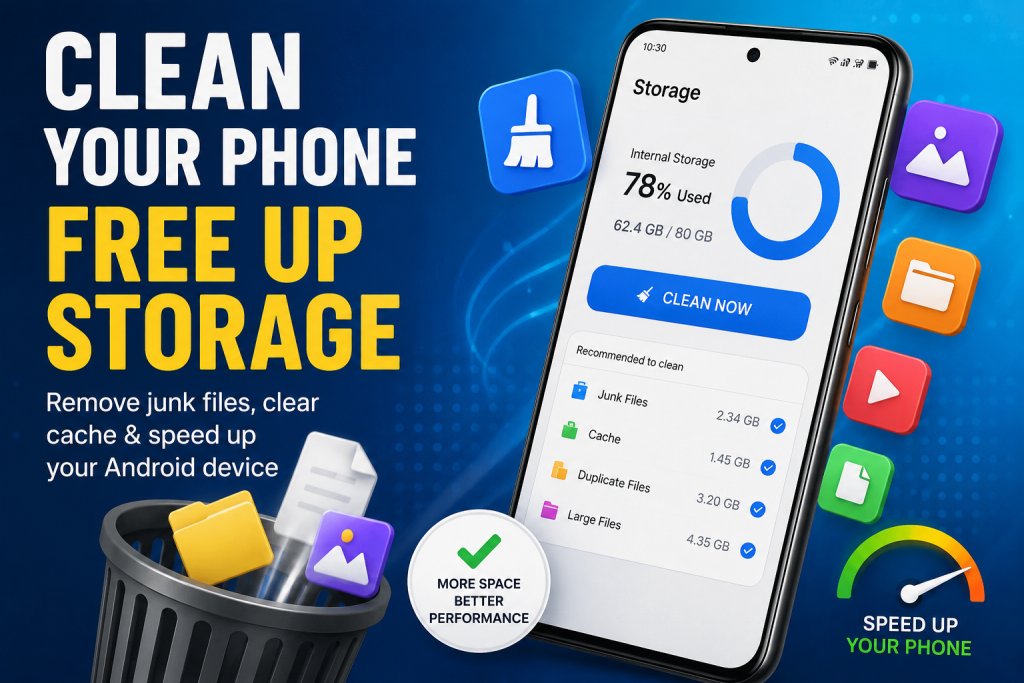
Modern smartphones store thousands of photos, videos, applications, documents, and temporary files. Over time, this accumulation can make devices feel slower, reduce available storage space, and make it harder to manage important content.
Anúncios
Fortunately, understanding where storage is being used and adopting a few maintenance habits can help keep your Android device organized and running more efficiently.
In this guide, you’ll learn what typically causes storage issues, how temporary files affect your device, and which tools are commonly used to help manage storage more effectively.
Anúncios
What Causes Storage Problems?
Many users are surprised when their phones suddenly display messages indicating that storage space is running low.
In most cases, storage becomes full gradually as different types of content accumulate over time.
CLEAN UP YOUR PHONE TODAY
You will be redirected
You will be redirected
Common causes include:
Photos
Photos often represent one of the largest categories of stored content on a smartphone.
High-resolution images captured over months or years can occupy a significant amount of storage space.
Videos
Videos generally require much more space than photos.
Short clips, social media recordings, and downloaded content can quickly consume available storage.
Downloads
Documents, PDFs, installation files, and media downloaded from websites may remain on devices long after they are no longer needed.
App Cache
Applications frequently create temporary files to improve loading speed and user experience.
Over time, these files can occupy substantial storage space.
Messaging Apps
Messaging platforms often automatically download photos, videos, voice notes, and documents received in conversations.
Without regular maintenance, these files can accumulate rapidly.
Understanding Temporary Files
Temporary files are small pieces of data created by applications and the operating system.
Their purpose is often to improve performance by storing information that may be needed again later.
What Are Temporary Files?
They include cached images, browsing data, application logs, and temporary downloads.
Why Do They Accumulate?
Apps continuously generate temporary information as users browse, stream content, shop online, or use social media.
Many applications rarely remove older temporary files automatically.
How Do They Affect Storage?
Although individual files may be small, their combined size can become significant over time, reducing available storage capacity.
Duplicate Photos and Videos
Duplicate media is another common source of storage waste.
Many users unintentionally create duplicate files through backups, downloads, editing applications, and messaging platforms.
Common Causes
- Multiple backups
- Downloading the same file more than once
- Saving shared media repeatedly
- Photo editing apps creating additional copies
Organization Tips
Regularly reviewing photo galleries and removing unnecessary duplicates can help free up space.
Cloud backup solutions may also help organize media collections more efficiently.
Storage Impact
Large duplicate videos and image collections can occupy several gigabytes of storage without users realizing it.
App Cache and Background Data
Applications store temporary information to improve usability and reduce loading times.
Why Do Apps Store Cache?
Cached files help apps load content more quickly by storing previously accessed information.
Examples include:
- Images
- Videos
- Website content
- User preferences
How Does Cache Grow Over Time?
The longer an app is used, the more temporary information it may store.
Social media, streaming, shopping, and messaging applications often generate large amounts of cached data.
Managing cache periodically may help recover storage space.
Files by Google
You will be redirected
Files by Google is one of the most widely used storage management tools available for Android devices.
Key Features
- Storage analysis
- File organization
- Duplicate file suggestions
- Large file detection
- Junk file recommendations
Storage Management
The application helps users identify content that may be taking up unnecessary space.
Duplicate File Detection
It can highlight duplicate photos and other files that may be safe to review and remove.
Junk File Suggestions
The app also recommends temporary files and unnecessary content that may be deleted to free up storage.
CCleaner
You will be redirected
CCleaner is another well-known tool used by Android users who want to better understand how storage is being utilized.
Storage Analysis
The application provides an overview of storage consumption across different categories.
Device Cleanup Features
Users can review temporary files, unused content, and other items that may no longer be necessary.
App Management
CCleaner also includes features that help users identify applications they may no longer use frequently.
Long-Term Maintenance Tips
Keeping a device organized is often easier than recovering storage after it becomes full.
The following habits may help maintain healthy storage levels over time:
✓ Review downloaded files regularly
✓ Remove applications you no longer use
✓ Back up photos and videos to cloud storage
✓ Clear application cache periodically
✓ Monitor large files that consume significant storage
✓ Organize screenshots and media folders
✓ Delete unnecessary installation files after use
✓ Review messaging app downloads frequently
Do Cleaning Apps Improve Performance?
Many users wonder whether cleaning applications can improve overall device performance.
The answer depends on the specific issue affecting the device.
If storage space is extremely limited, removing unnecessary files may improve responsiveness and make it easier for the operating system to function efficiently.
However, cleaning apps are most effective when used as part of regular device maintenance rather than as a solution for every performance issue.
Choosing the Right Storage Management Tool
Different users have different needs.
Some prefer simple solutions that focus on file organization, while others want detailed storage analysis and maintenance recommendations.
Before choosing a tool, consider:
- Ease of use
- Available storage features
- Duplicate file detection
- File organization tools
- Compatibility with your device
The best option is often the one that helps you consistently maintain your device and keep storage organized.
Conclusion
Storage problems are a common challenge for Android users, but they can often be managed through a combination of good habits and effective tools.
Understanding how storage is consumed, reviewing temporary files, organizing media, and periodically cleaning unnecessary content can help maintain a smoother user experience.
Whether you choose Files by Google, CCleaner, AVG Cleaner, or simply adopt better file management habits, regular maintenance can help keep your device organized and make storage issues less frequent in the future.
❓ FAQ
1. Why is my phone storage full?
Storage typically becomes full due to photos, videos, downloads, messaging app media, cached data, and installed applications.
2. Are cleaning apps safe?
Many well-known storage management apps are designed to help users identify files that may be reviewed and removed. Users should always review recommendations before deleting content.
3. How often should I clean my device?
Many users benefit from reviewing storage every few weeks or once per month.
4. Can deleting cache improve storage?
Yes. Cached files can occupy significant storage space over time and clearing cache may help recover available storage.
5. Which app is best for finding large files?
Several storage management applications offer large file detection features, including Files by Google and other storage analysis tools.
6. How can I prevent storage problems in the future?
Regular maintenance, cloud backups, removing unused apps, and reviewing downloaded files can help prevent storage issues from accumulating.